Seedlings in Pots or Direct in the Bed?
Seedlings in pots or direct in the bed: choose a sowing rhythm that suits your space, then tend young plants without needless handling or crowding.
The common mistake with seedlings in pots or direct in the bed is choosing pots by habit, then discovering there is nowhere to keep them bright, cool and watered. The cost is not just extra compost: it is a daily queue of trays, labels and small plants waiting for attention. Direct sowing avoids that indoor nursery, but gives you less control over where each seedling begins.
The useful choice is not a contest between methods. It is a decision about where you have room to tend young plants, how much handling a crop can tolerate, and whether you want one concentrated sowing day or a slower succession in the bed.
Which plants suit pots, and which suit the bed?
Starting in pots is useful when seeds are small, seedlings need protection from slugs or birds, or the bed is still occupied. It also helps with plants that are easier to space once their leaves are visible. A seed tray or module tray keeps those early stages together, where you can inspect them without kneeling over a whole border.
Direct sowing is often the simpler choice for plants that dislike root disturbance or grow quickly once conditions suit them. Root vegetables such as carrots are usually sown where they will mature, since thinning is less disruptive than lifting and transplanting. Many hardy annuals and leafy crops can also be sown straight into prepared ground, provided the bed is not waterlogged or crowded with weeds.
Check the seed packet for sowing depth, spacing and whether it recommends indoor or outdoor sowing. The variety and local conditions matter; follow the packet and any relevant manufacturer instructions.
How does each method use space and attention?
A pot takes up space before it reaches the garden. A bright windowsill, cold frame or sheltered bench can hold a modest batch, but trays need room around them for airflow and access to watering. Crowded containers become awkward to turn and inspect, and seedlings can stretch towards the nearest light.
Direct sowing moves the space demand outdoors. The bed must be ready when you sow, with a clear patch for each row or block. That can be inconvenient if soil preparation has slipped, but it saves the indoor space and repeated moving that container starts can require.
The tending rhythm differs too. Pots ask for frequent brief checks: compost drying, seedlings emerging, and whether a tray needs more light or less heat. A bed generally needs fewer small interventions before emergence, but weather, weeds and hungry visitors are harder to manage across an open area. Neither method is hands-off; one simply puts the reminders in a different place.
What should you do through a sowing week?
Use the week as a flexible routine rather than a deadline. Soil may be too wet to work, or a cool spell may make an indoor start more sensible. The aim is to make a manageable batch and give it a clear place to go.
- At the start of the week: choose the crops and read their sowing instructions. Set aside only the trays, pots or bed space you can tend comfortably.
- Before sowing: check that the bed is workable and clear of obvious weeds, or wash used pots and fill them with fresh seed compost. Gather labels, a pencil and a fine-rose watering can.
- On sowing day: sow a small batch at the depth and spacing given on the packet. Label each container or row at once; a tray of identical green shoots is not a reliable filing system.
- On the following days: check moisture with a fingertip and water gently if the compost or soil is drying. Keep containers in a suitable bright place, and look over direct-sown rows for disturbance or surface drying.
- When seedlings appear: thin crowded direct-sown seedlings gradually, or separate pot-grown seedlings only when they are large enough to handle without pulling at their stems. Keep the strongest, well-spaced plants.
- Later in the week: note which rows or trays need another look and whether the bed is ready for a further sowing. A brief record on the seed packet or a garden notebook is enough.
Which method answers these common sowing questions?
Can you sow the same crop in pots and in the bed?
Yes, if you have space to tend both batches and the crop suits both approaches. A small direct sowing can provide an early look at how the bed is behaving, while a few pots act as a reserve for gaps.
When should you thin direct-sown seedlings?
Thin once seedlings are easy to distinguish and handle, following the spacing on the packet. Remove the weaker extras carefully rather than tugging near the plants you are keeping, especially where roots are close together.
Do pot-grown seedlings need hardening off?
Plants raised in sheltered conditions usually need a gradual adjustment before they stay outdoors. Give them increasing exposure to outdoor conditions, avoiding an abrupt move into wind or harsh sun; the suitable pace depends on the crop and the weather.
What if there is no bright windowsill?
Direct sowing may be the more practical choice for crops that can go into the bed, rather than trying to raise seedlings in a dim corner. If a crop needs protected starting, use a suitable bright outdoor shelter or wait until conditions allow outdoor sowing.
How can you make the choice without adding a second job?
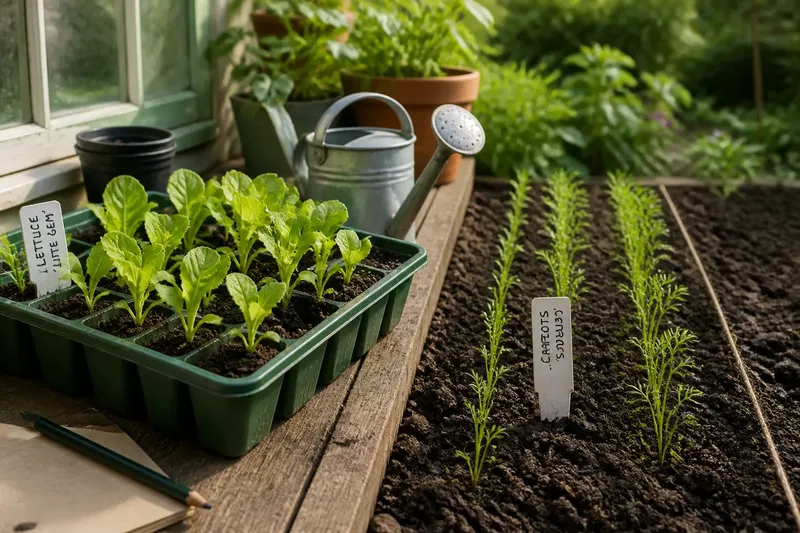
Imagine you have one clear bed strip, a few reusable modules and a windowsill already holding houseplants. You sow carrots directly into the strip, where their roots can remain undisturbed, and start a modest batch of lettuce in modules to fill gaps later. The expected visible result is a labelled row in the bed and a compact tray that can be checked alongside the rest of the garden, not a sprawling collection of pots competing for light.
That mixed approach is useful when crops have different needs, but it is not worth starting every seed in a container simply because modules are available. Nor is it helpful to sow a long row if you cannot keep track of thinning and watering. Choose the smallest batch that fits the time and space you have.
When deciding between seedlings in pots or direct in the bed, treat the sowing place as part of the tending routine. If you can see and reach a tray easily, container starts may be manageable; if the bed is ready and the crop resents disturbance, sow it there. A clear label and a brief, regular look are more useful than an elaborate schedule that quietly becomes another chore.